Loose Parts
Why open-ended materials encourage flexible thinking and richer learning
Not all learning materials ask the same of children.
Some resources have a clearly defined purpose. A puzzle has a picture to complete. A shape sorter has a correct answer. A toy telephone is designed to be a telephone.
Loose parts are different.
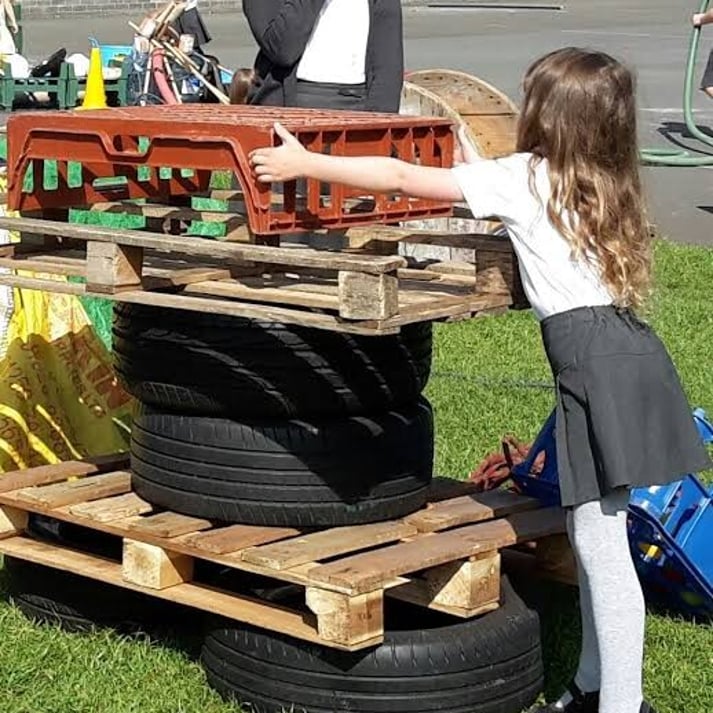
They do not prescribe how they should be used or what children should make with them. Instead, they invite experimentation, adaptation and imagination, allowing children to assign their own meaning and purpose. A collection of stones might become a mathematical model, ingredients for an imaginary feast, pieces in a game or the foundations of a bridge. The materials remain the same, but the possibilities continue to change.
This flexibility is what makes loose parts so powerful. They shift the emphasis from discovering the "right" way to use a resource towards exploring what might be possible.
Loose parts do not contain possibilities. They create them.
Open-ended resources invite open-ended thinking
Children naturally explore ideas by manipulating the world around them. They compare, combine, sort, arrange, dismantle, reconstruct and transform materials as they test their thinking.
Loose parts support these processes because they do not limit children to a single pathway. Their value lies in the freedom they offer to investigate, revise and reinterpret ideas as understanding develops.
The same collection of materials may support scientific inquiry, mathematical reasoning, storytelling, artistic expression or collaborative problem-solving, depending on the questions children are pursuing. Rather than directing learning towards a predetermined outcome, loose parts adapt to the thinking that emerges around them.
The meaning comes from the child
No loose part is inherently educational.
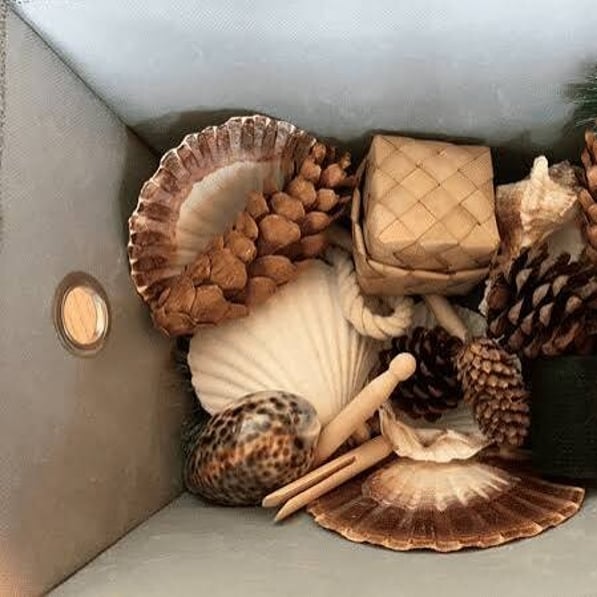
A stick is simply a stick until a child decides it is a fishing rod, a magic wand, a measuring tool or part of an elaborate construction. Likewise, a handful of bottle tops, pieces of fabric or cardboard tubes acquire meaning through the purposes children assign to them.
This reminds us that the educational value of loose parts does not lie in the objects themselves but in the opportunities they provide for children to think, imagine, negotiate and solve problems. It is the interaction between the learner and the material that creates the learning.
Variety matters more than quantity
An effective collection of loose parts is not necessarily a large one.
A thoughtful range of materials that differ in size, texture, weight, flexibility and purpose often generates richer investigation than shelves filled with similar resources. Diversity encourages children to compare, combine and experiment, discovering new relationships between materials that may not have been obvious at first.
This also means collections should continue to evolve. Rotating materials, introducing unfamiliar objects and responding to children's emerging interests can refresh possibilities without requiring large budgets or constant purchasing.
Loose parts belong across the curriculum
Loose parts are sometimes associated primarily with imaginative play or the early years, but their potential extends far beyond these contexts.
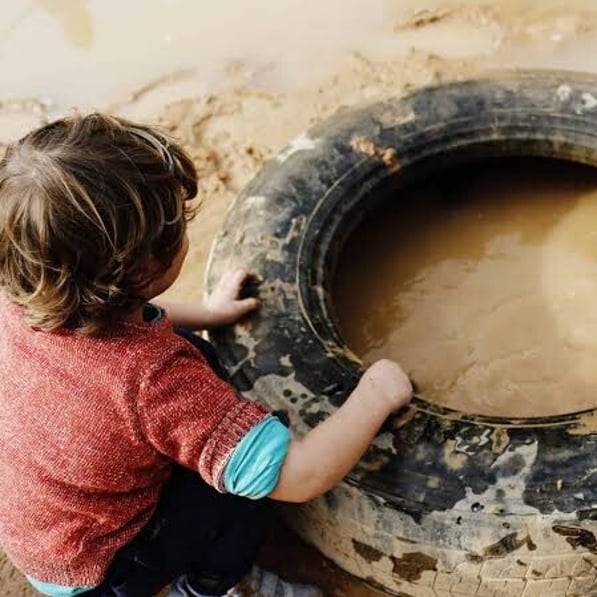
Children may use natural materials to explore pattern and symmetry, recycled objects to model scientific ideas, construction materials to investigate engineering principles or everyday items to represent historical events and mathematical concepts. Because loose parts can take on multiple meanings, they readily support inquiry across learning areas rather than belonging to a single subject.
Their strength lies in their adaptability. As children's questions become more sophisticated, the same materials continue to provide opportunities for increasingly complex thinking.
What does this mean for practice?
Developing a rich collection of loose parts begins with looking differently at the materials already available.
Rather than asking whether a resource is educational, it can be more useful to ask whether it offers children enough flexibility to explore multiple possibilities. Materials that can be moved, combined, redesigned, taken apart and repurposed often generate the richest learning because they allow children to shape the experience rather than simply follow it.
Observing how children use loose parts is equally important. Which materials are returned to repeatedly? Which combinations emerge naturally? Which objects remain untouched? These patterns help teachers understand not only children's interests but also how the environment can continue to evolve in response to their thinking.
Longworth Practice Guide
Ready to go deeper?
The Foundations of Play series is designed to introduce the key ideas that underpin high-quality play pedagogy. If you're ready to move beyond the foundations, Longworth Education offers practical professional learning that helps turn these ideas into confident classroom practice.
Whether you're an individual teacher looking to deepen your understanding, a leadership team supporting school-wide change or a school seeking ongoing coaching, we're here to help.