Play Invitations
Designing opportunities that spark curiosity, not compliance
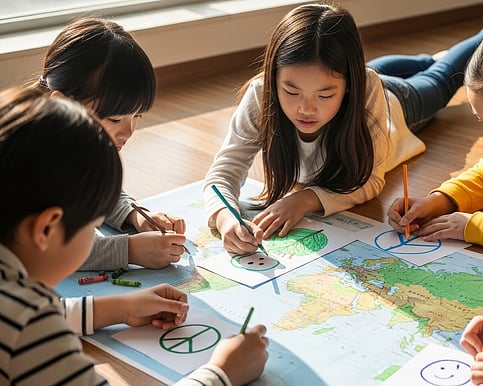
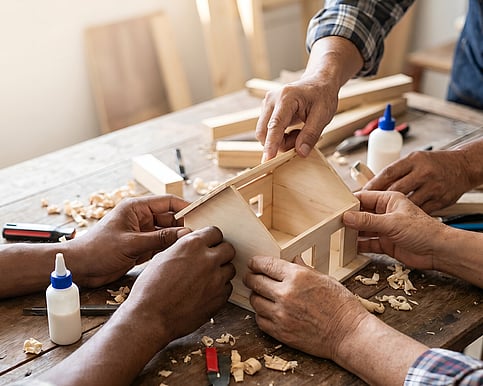
Walk into a play-based classroom and you are likely to encounter invitations scattered throughout the environment. A collection of natural materials arranged on a table. An unfinished construction. A photograph, an intriguing object or a simple question waiting to be explored.
These experiences are often called provocations or invitations, yet the terms are not always used consistently. More importantly, they are sometimes misunderstood as activities that children are expected to complete.
A genuine play invitation is something quite different.
It is not designed to lead every child towards the same outcome or to demonstrate a predetermined piece of learning. Instead, it offers a possibility. It creates a reason to pause, wonder, investigate and ask, "What might I do with this?"
A play invitation is not an activity. It is an invitation to think.
Invitations begin with curiosity
The most powerful invitations do not begin with resources.
They begin with questions.
What are the children becoming curious about?
What ideas are they returning to?
What problems are they trying to solve?
What working theories are beginning to emerge?
The invitation grows from those observations. Materials, books, images or challenges are then selected because they have the potential to deepen children's existing thinking, not redirect it towards an adult's agenda.
This is why two classrooms can offer exactly the same resources and produce entirely different learning. The invitation lies not in the materials themselves, but in the thinking they invite.
Less can invite more
There is a temptation to believe that a successful invitation requires elaborate preparation. Beautiful displays, carefully colour-coordinated loose parts and dozens of carefully selected resources have become almost synonymous with play pedagogy.
Yet children rarely engage deeply because something looks attractive.
They engage because something captures their curiosity.
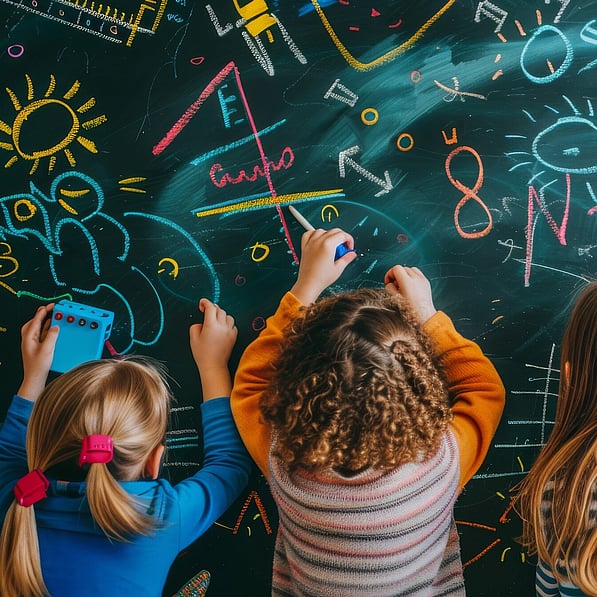
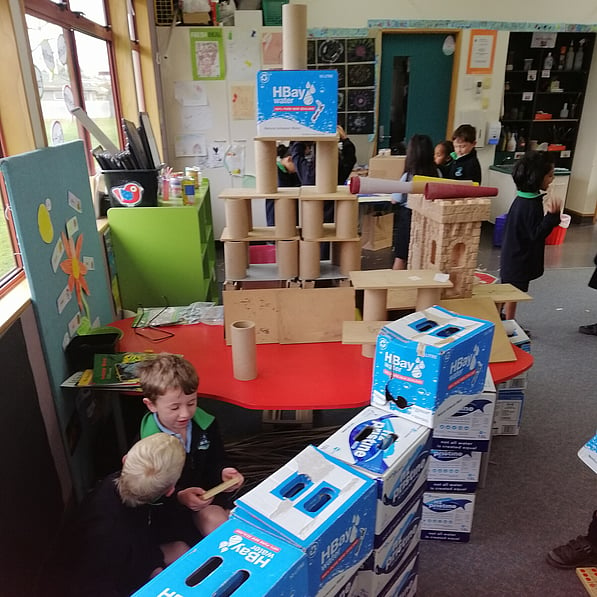
Sometimes a single unfamiliar object, an unexpected photograph, a partly constructed bridge or a simple question can generate richer investigation than a table filled with carefully arranged materials.
What matters is not how much we provide, but whether there is enough uncertainty to invite children into the thinking.
An invitation should remain open
The purpose of an invitation is not to lead every child towards the same outcome.
It is to create space for multiple possibilities.
One child may notice pattern.
Another may begin telling a story.
Someone else may start measuring, comparing or constructing.
Each response represents a different way of making meaning.
If every child produces essentially the same product, follows the same steps or arrives at the same conclusion, the experience has probably become an activity rather than an invitation.
Open invitations leave room for interpretation.
That is where creativity, agency and genuine problem-solving begin.
The invitation is only the beginning
A thoughtfully designed invitation creates possibility, but its value is revealed through what children do with it. Their responses, together with the teacher’s interpretation of what unfolds, determine whether the invitation becomes a meaningful context for learning.
An invitation may be overlooked because it does not connect with children’s current interests or experiences. It may lead to a sustained investigation that develops over time, or it may be transformed into something quite different from what the teacher first imagined. Each response offers useful insight into what children are noticing, valuing and trying to understand.
The success of an invitation is therefore not measured by whether children use it as intended, but by whether it creates space for meaningful thinking, exploration and learning.
What does this mean for practice?
When planning invitations, it can be helpful to begin with observation rather than resources.
Ask yourself:
What are the children trying to understand?
What possibilities might deepen that thinking?
Which materials could extend the investigation without determining the outcome?
These questions encourage us to design invitations that respond to children's curiosity rather than simply filling the environment with activities.
The goal is not to create beautiful displays.
It is to create meaningful opportunities for thinking.

Longworth Practice Guide
Ready to go deeper
The Foundations of Play series is designed to introduce the key ideas that underpin high-quality play pedagogy. If you're ready to move beyond the foundations, Longworth Education offers practical professional learning that helps turn these ideas into confident classroom practice.
Whether you're an individual teacher looking to deepen your understanding, a leadership team supporting school-wide change or a school seeking ongoing coaching, we're here to help.