The Role of the Teacher
Why teaching through play demands more - not less - professional expertise
One of the greatest misconceptions about play pedagogy is that the role of the teacher becomes less important.
Spend time in a high-quality play-based classroom and you might notice children moving freely, deeply engaged in investigations, conversations and problem solving. At first glance, it can appear that the teacher has stepped back.
Look more closely, however, and a very different picture emerges.
Every invitation, every material, every question, every decision about when to observe, when to wait and when to intervene reflects deliberate professional judgement. Far from reducing the teacher's role, play pedagogy demands an extraordinary level of expertise.
The question is not whether teachers should be involved.
It is how they should be involved.
Teaching begins long before children arrive
One of the most important acts of teaching happens before the day even begins.
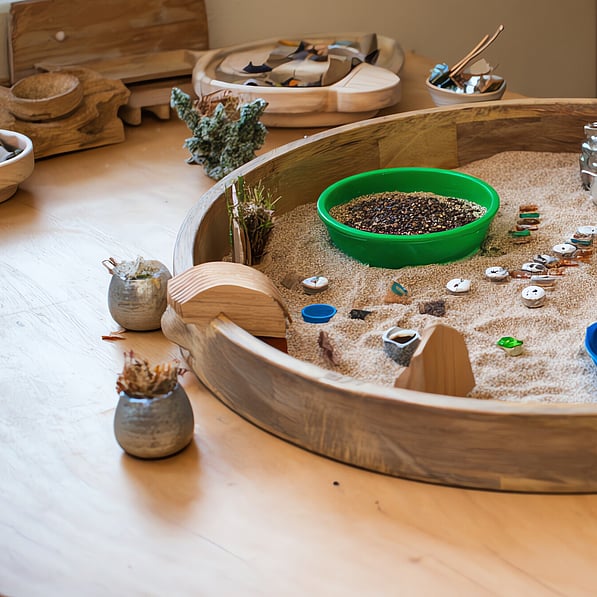
The role of the teacher is to carefully consider the environment in which learning will take place. Materials have been selected with purpose. Spaces have been organised to encourage particular kinds of thinking, collaboration or investigation. Provocations have been designed, not to direct children towards predetermined answers, but to spark curiosity and invite possibility.
Children make choices within an environment that has itself been intentionally designed.
The environment is never neutral.
It quietly communicates what is valued, what is possible and what kinds of learning are likely to emerge.
Observation is an act of teaching
One of the biggest shifts teachers make when adopting play pedagogy is changing how they think about observation.
Observation is not simply recording what children have done.
The role of the teacher is to engage in professional inquiry.
When teachers observe closely, they begin looking beyond behaviour to notice thinking. They recognise emerging working theories, developing interests, misconceptions, relationships, strengths, cultural knowledge and the strategies children are using to solve problems.
Observation provides the information that makes intentional teaching possible.
Without it, intervention becomes guesswork.
Knowing when not to teach is part of teaching
Perhaps the most difficult professional decision is deciding not to intervene.
Adults often feel compelled to help. We answer questions quickly, solve problems efficiently and prevent children from experiencing frustration. While well intentioned, these actions can unintentionally remove the very thinking we hope children will develop.
Sometimes the most powerful teaching decision is to wait.
Waiting creates space for children to persist, negotiate, rethink and discover that they are capable of solving problems for themselves.
Stepping back is not passive.
It is an intentional decision to protect children's opportunity to think.
Teaching that responds rather than directs
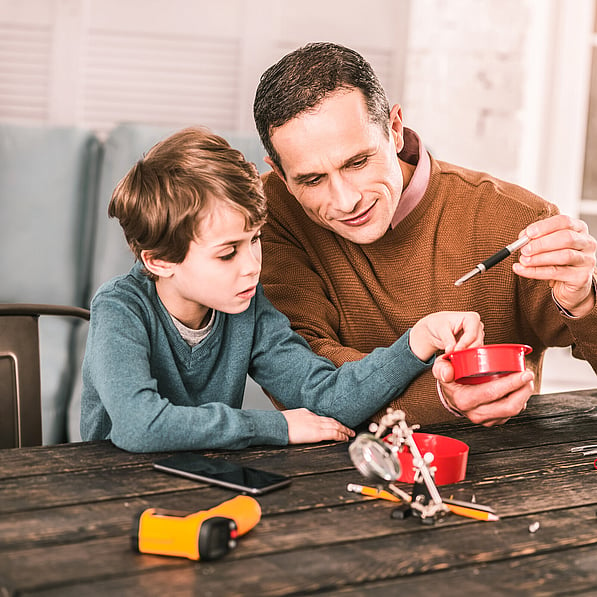
There are also moments when stepping back is no longer the most appropriate response. A child may need new vocabulary, a misconception may need to be challenged, or an investigation may have reached a point where a carefully chosen question, material or perspective could open up new possibilities. Responsive teaching is neither invisible nor accidental; it is carefully timed and shaped by what the teacher has noticed.
Rather than controlling the direction of learning, the teacher works to extend it. This may involve modelling, questioning, offering explicit instruction or drawing attention to something the children have not yet recognised. The important distinction is not how much the teacher does, but whether their response deepens children’s thinking.
Relationships shape what learning is possible
Children are more likely to take intellectual risks when they feel known, respected and secure. They need to trust that their ideas will be listened to, that mistakes will not diminish them, and that uncertainty is a normal part of learning rather than something to avoid.
In play, relationships influence almost everything. They shape whether children are willing to share an unfinished idea, enter into negotiation, persist when something becomes difficult or invite others into their thinking. Teachers contribute to this not only through what they say, but through the ways they respond, the time they give, the expectations they communicate and the seriousness with which they treat children’s perspectives.
This matters because children are always forming beliefs about themselves as learners. Through their interactions with adults, they begin to understand whether their questions are valued, whether they are capable of solving problems and whether their contribution matters.
Relationships do not sit alongside learning as something separate. They help determine the depth, confidence and possibility with which learning unfolds.
Expertise lies in the decisions we cannot see
From the outside, a play-based classroom can appear spontaneous. Children are moving between ideas, materials and conversations, and the learning may seem to unfold naturally. What is less visible is the continuous professional judgement shaping those experiences.
Teachers are constantly deciding what to notice, what to document and what might need a response. They are weighing whether a child needs support or more time, whether a question will deepen an investigation or interrupt it, and whether a new resource will extend the learning or simply redirect it. At the same time, they are holding curriculum intentions alongside children’s emerging interests and considering how culture, relationships, development and prior experience are influencing what they see.
These decisions rarely happen in a neat sequence. They are made in the moment, often with incomplete information, and they depend on the teacher’s ability to interpret what is unfolding rather than simply follow a predetermined plan.
This is why teaching through play is not a simpler form of teaching. It requires teachers to notice closely, think flexibly and respond with purpose.
What does this mean for practice?
Perhaps the most useful question is not:
How involved should I be?
Instead ask:
What response is most likely to deepen children's thinking right now?
The most appropriate response will depend on what is unfolding in that moment. At times, the best decision is to observe or wait, giving children space to work through an idea for themselves. At other times, a carefully chosen question, a brief explanation or a moment of direct instruction may help move the learning forward.
The skill lies in recognising which response is needed, and when.
Pause and reflect
During the past hour, how many different teaching decisions have you made that children may never have noticed?
When do you tend to intervene too early? When might you wait too long?
How does your observation influence your next teaching decision?
If someone watched your classroom for ten minutes, what evidence would they see of intentional teaching beyond direct instruction?

Longworth Practice Guide
Ready to go deeper?
The Foundations of Play series is designed to introduce the key ideas that underpin high-quality play pedagogy. If you're ready to move beyond the foundations, Longworth Education offers practical professional learning that helps turn these ideas into confident classroom practice.
Whether you're an individual teacher looking to deepen your understanding, a leadership team supporting school-wide change or a school seeking ongoing coaching, we're here to help.